Bed bug thermal and chemical remediation handles infestations across diverse residential architectures in Pinellas County, from raised 1920s craftsman bungalows in Kenwood and Euclid-St. Paul's to concrete block…
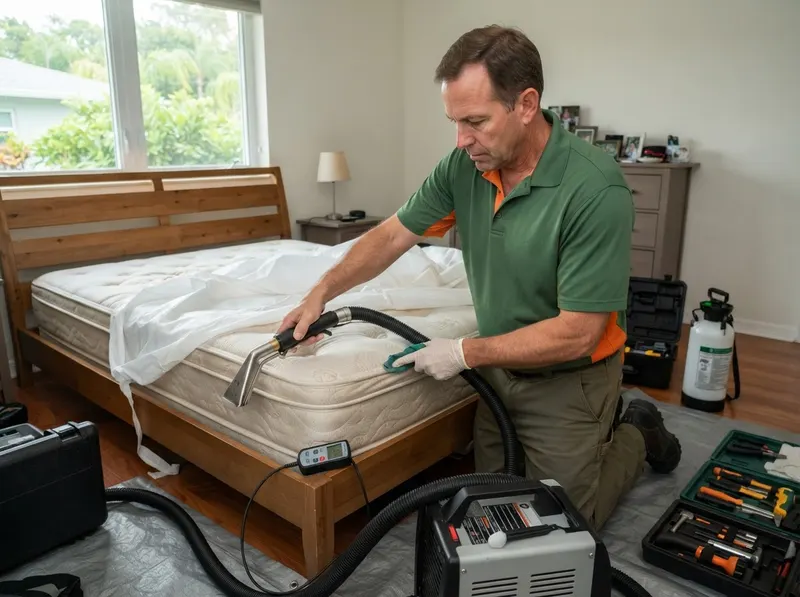
Bed bug thermal and chemical remediation handles infestations across diverse residential architectures in Pinellas County, from raised 1920s craftsman bungalows in Kenwood and Euclid-St. Paul's to concrete block structures in Disston Heights and slab-on-grade waterfront estates in Snell Isle. Florida's high coastal humidity accelerates the lifecycle of Cimex lectularius, allowing eggs to hatch within 6 to 10 days in unconditioned or partially air-conditioned spaces. Thermal treatment introduces clean, dry air heated between 120 and 135 degrees Fahrenheit through industrial ducting, penetrating deep into wall voids, mattress cores, and beneath heart-pine floorboards where over-the-counter liquids fail to contact harborage zones.
While thermal remediation delivers an immediate kill of adult bugs, nymphs, and unhatched eggs through thermal protein denaturation, heat alone leaves zero protective barrier once structural temperatures normalize. Combining controlled thermal elevation with targeted, pet-conscious desiccant dusts and residual chemical barriers addresses perimeter re-entry. In historic neighborhoods like Old Northeast and Crescent Lake, where lath-and-plaster construction features hollow structural gaps, technicians inject amorphous silica dust behind outlet faceplates and along floor trim. This desiccant abrades the insect's outer waxy cuticle without off-gassing synthetic chemicals or triggering respiratory sensitivities for residents and indoor animals.
Operational protocols adapt to the environmental vulnerabilities of coastal communities such as Shore Acres, Coquina Key, and Bayway Isles. Because high water tables and coastal storm surges make Tampa Bay's watershed vulnerable to runoff, chemical treatments avoid heavy perimeter soaking, utilizing micro-encapsulated formulations applied strictly to internal crevices, headboards, and structural tack strips. Structural preparation requires the removal of heat-sensitive items, including vinyl window blinds, wax candles, medication, and aerosol cans, prior to the heating sequence. Properties complete treatment in a single operational day, avoiding extended multi-week evacuation schedules while securing homes against pest incursions with gentle, protective care.
Every job gets a firm, written price after a free on-site visit.
Tell us about your bed bug thermal and chemical remediation job in St. Petersburg and we'll send a clear, written quote, usually the same day.
 Pelican Grove Pest Control