St. Petersburg homes face distinct rodent pressures due to local tree canopies, high humidity, and proximity to Tampa Bay waters. Roof rats (Rattus rattus) leverage live oak branches and palm fronds overhanging…
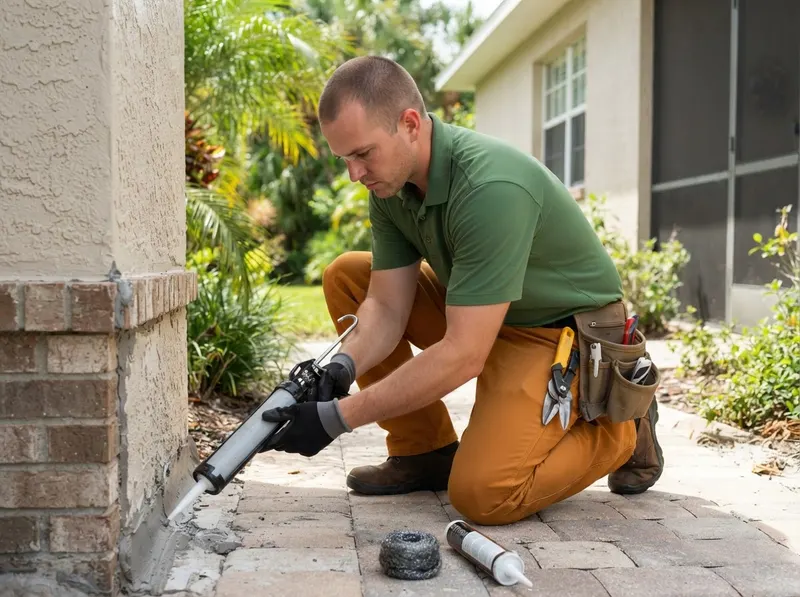
St. Petersburg homes face distinct rodent pressures due to local tree canopies, high humidity, and proximity to Tampa Bay waters. Roof rats (Rattus rattus) leverage live oak branches and palm fronds overhanging rooflines in Old Northeast, Kenwood, and Crescent Lake to access attic spaces. Traditional rodent control often relies on bait stations or routine chemical applications that expose household pets to secondary poisoning risks. In contrast, physical exclusion installs mechanical shields directly over soffit gaps, fascia joints, crawlspace vents, and plumbing tie-ins. By cutting off entry points measuring one-quarter inch or larger, this structural approach protects coastal living areas and attic insulation without dispersing chemical rodenticides near domestic animals or sensitive Pinellas County waterways.
Selecting structural exclusion addresses the underlying entry vulnerability rather than treating rat activity as an indefinite monthly subscription. If an attic harbors an active nesting population, the sequence requires sealing the structure first, followed by clean snap-trapping within the envelope until the space clears within 10 to 14 days. The mechanical trade-off involves surface aesthetics versus longevity: galvanized steel mesh and aluminum flashing remain visible along certain roof intersections, but unlike expanding spray foams, rodents cannot gnaw through metal barriers. Coastal properties in Shore Acres, Snell Isle, and Coquina Key frequently encounter settlement cracks and warped fascia boards caused by high humidity and tidal shifts, requiring custom-formed sheet metal across exterior gaps.
Every structural assessment inspects critical exterior zones: roof returns, AC chase lines, dryer exhausts, plumbing vent stacks, and foundation weep holes. In historic Euclid-St. Paul's bungalows and Disston Heights block residences, older foundation skirtings and crawlspace accesses often settle, creating ground-level runways for field mice and Norway rats. Sealing these vulnerabilities prevents pest entry while preserving necessary structural airflow, keeping coastal homes shielded, sanitary, and structurally sound.
Every job gets a firm, written price after a free on-site visit.
Tell us about your rodent proofing and exclusion job in St. Petersburg and we'll send a clear, written quote, usually the same day.
 Pelican Grove Pest Control