A perimeter barrier focuses active materials on the exterior shell of a structure rather than dispersing broad-spectrum aerosols across interior carpets or baseboards. In subtropical Pinellas County climates, daytime…
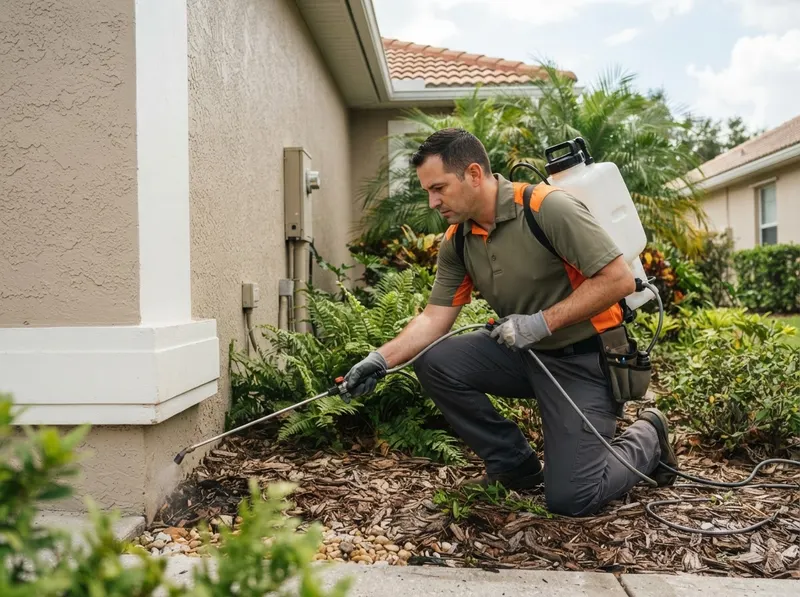
A perimeter barrier focuses active materials on the exterior shell of a structure rather than dispersing broad-spectrum aerosols across interior carpets or baseboards. In subtropical Pinellas County climates, daytime relative humidity regularly averages above 70%, pushing subterranean moisture pests like palmetto bugs and ghost ants out of sod beds toward crawl spaces and brick weep holes. Applying a bonded micro-encapsulated barrier along 3 vertical feet of foundation wall and 3 horizontal feet of surrounding ground creates an environmental transition zone. Insects traversing this treated margin carry materials back to nesting colonies, halting entry without requiring family members or household pets to vacate interior rooms.
Selecting a dedicated exterior perimeter defense suits homeowners seeking sustained seasonal exclusion, whereas indoor baseboard spraying only reacts after an infestation establishes inside walls. The primary operational trade-off is mechanical exposure: persistent summer rainfall, typical around coastal waterways like Tampa Bay and Boca Ciega Bay, gradually breaks down surface deposits through soil saturation and solar radiation. Consequently, maintaining an unbroken exterior envelope requires regular quarterly replenishment rather than single-event applications. For properties near sensitive marine shorelines in Shore Acres or Coquina Key, technicians apply insoluble granular buffers alongside low-drift liquid formulations to guard water tables and nearby canals.
Structure age dictates treatment protocols across St. Petersburg neighborhoods. Historic 1920s wood-frame bungalows in Old Northeast, Kenwood, and Euclid-St. Paul's feature raised pier foundations with open crawl space lattice that demand deep structural perimeter sweeps to halt wood-seeking moisture pests. In slab-on-grade subdivisions throughout Disston Heights and low-lying coastal tracts across Snell Isle and Bayway Isles, high water tables force subterranean colonies upward. Treatment along these concrete footprints requires clearing organic mulch lines 6 inches back from stucco edges and treating plumbing ingress points around hose bibs and air handler condensation drains.
Every job gets a firm, written price after a free on-site visit.
Tell us about your perimeter pest barrier treatment job in St. Petersburg and we'll send a clear, written quote, usually the same day.
 Pelican Grove Pest Control